


A Blow That Flattens
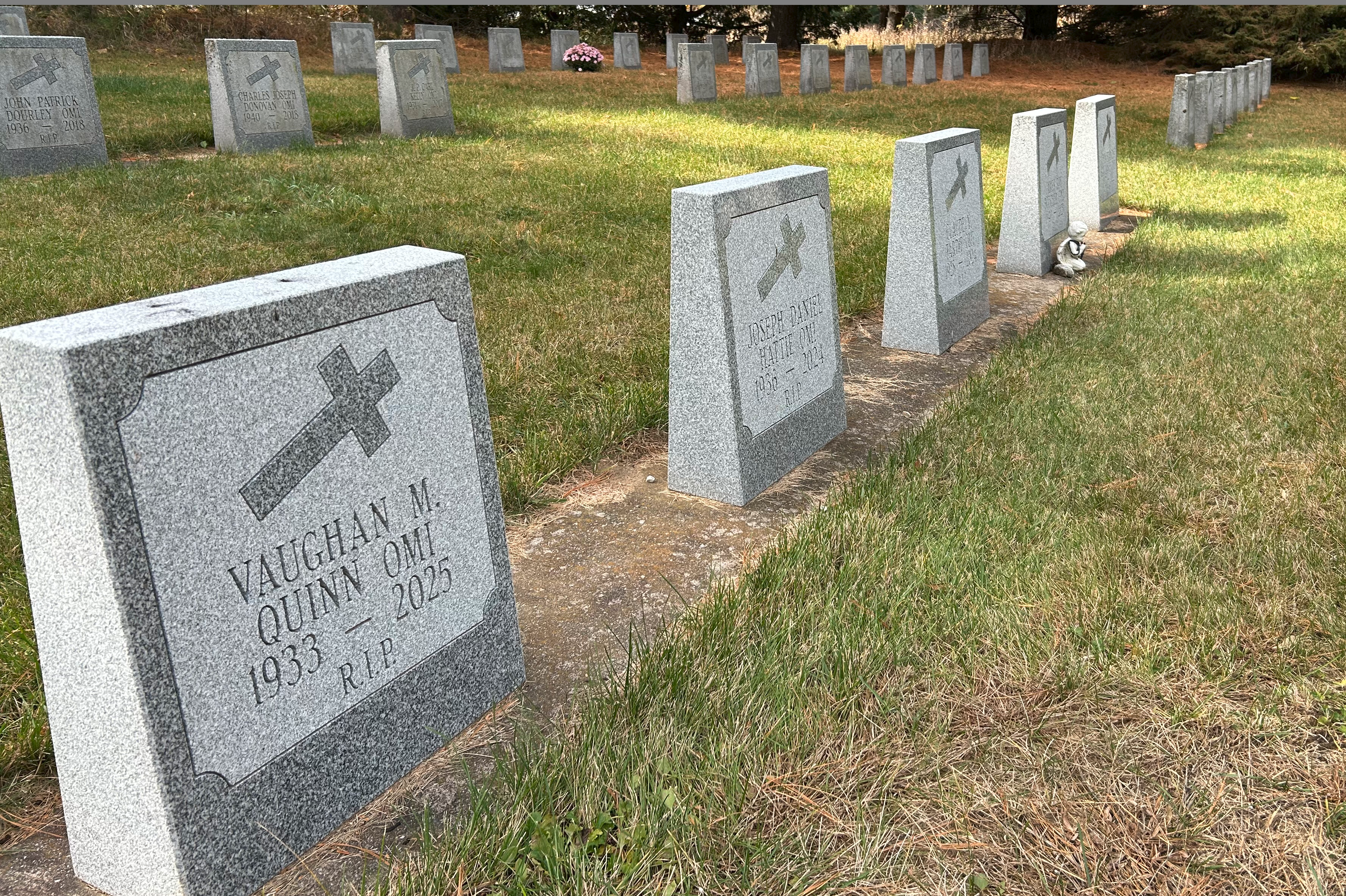
November opened with a quiet stillness, as the fading light and colours of autumn invite our souls into a season of deep remembrance and gentle sorrow. From All Saints Solemnity on November 1 and All Souls’ day on November 2, Catholic Tradition carves out this month as a sacred reflection on those who have crossed the threshold of this life into Eternal Life. On November 6, I commemorated the 20th anniversary of my mother’s death. And others will do likewise by signing the Book of Life at their parishes, or by offering a Mass for their loved ones, or by participating in Remembrance Day events on November 11. There is a palpable sense that the veil between heaven and earth hangs remarkably thin. Yet we are comforted in the remembrance and knowledge that our relationship with those we love is not severed by death, but merely transformed within the Communion of Saints.
This tender care for the departed is carried out with particular devotion by the Missionary Oblates of Mary Immaculate. Reflecting our Founder’s love for his community, and our calling to seek out the forgotten and the abandoned, the Oblate Family strives to ensure that no soul is left in isolation. Saint Eugène habitually shared a touching and demonstrative sorrow at an Oblate’s death: “I will weep for him all my life, as for those who have preceded him into eternity; their loss leaves me inconsolable […] A blow of this kind flattens me; my soul is sunk in sorrow”. Or on another’s death: “How bitter death is when it takes away from us those whom we have so many reasons to regret…. I groan several times a day over this irreparable loss. The void he leaves around me is an abyss nothing can bridge. He is a loss to my heart…”
For the Oblate Family, the theological perspective on death, the deceased, and liturgical remembrance (such as All Souls Day) are captured in the Founder’s personal letters and journals and within our Constitutions and Rules (CCRR). Our Superior General’s reflection Cor Unum: Grateful Remembrance, reminds us of Constitution 43: “As members of the same family, we keep alive the memory of the deceased and pray for them, faithfully offering the suffrages prescribed on their behalf.” (C 43). This rule ensures that the missionary community on earth stays linked to what Saint Eugène called the “community in heaven”, through daily prayer and specified Mass intentions (suffrages). The CCRR extends these prayers of suffrage to include the biological parents and siblings of the missionaries, integrating them into the order’s spiritual life.
The first approved edition of the CCRR in 1827 contained numerous provisions on behalf of deceased members. Over time cultural and technological changes left some of these preions less contemporaneous. For instance:
“The Society’s deceased members are not to be buried within less than twenty-four hours, unless because of the smell or for some other reason, the Superior judges fit to anticipate the burial slightly” (1827).”
The 1928 edition simplified the text, merely indicating that burial could be advanced “for grave reasons”. Surely no pun was intended!
Before his death on May 21, 1861, Saint Eugène summarized his core directive for his spiritual sons: “Among yourselves practice charity, charity, charity – and, outside, zeal for the salvation of souls“. This mutual charity extends the spiritual bonds beyond the living, to departed members. Today we still see our dearly departed as a growing community in heaven who remain tied to their earthly brothers (and sisters) by charity and prayer. St. Eugène’s entire life’s work was dedicated to the salvation of souls—seeking out the poor, the marginalized, and prisoners, viewing spiritual care as a bridge to eternal salvation. In Oblate communities today, the Oblate Family – in Kenya, Peru, Canada and globally – continues to to “leave nothing undared for the Kingdom of God“.
Debbie Doornbos’s Reflection Please Remember Me! noted: There are many ways to remember, many rituals and ceremonies that take place to help us. Today, in OMI-Lacombe Province, upon the call of the Provincial Vicar, consistent with the CCRR, Appendix #2: Each Oblate priest shall celebrate one Mass and each Brother attend Mass upon the death of … any member…”. For other Oblate Family, such as Lay Oblate Associates, there is no such official directive, yet the Province’s Prayer Ministry, At The Foot of The Cross, includes any requests for collective prayer.
Acts of fath, including the Oblate All Souls Novena, Día de los Muertos, blessings, gravesite visits and requiem masses all acknowledge the pain of absence while simultaneously celebrating the enduring presence of the deceased within the family. Sandy Prather summarizes it well in her Reflection, “Carrying On”: Remembering is more than looking back. It is giving thanks, grieving together, celebrating lives well lived, and allowing the love we have received to shape the way we live and serve today. The solemnity of a liturgy and the warmth of ancestral love marks a gathering together in prayer and unwavering faithfulness within our larger Oblate community. We transform our ultimate mortality, less as a blow that flattens than as a sacred journey homeward, guided by the light of Faith.
In memory of Fr. Roy Boucher, OMI (1940-2023)
By Arnie Francis
[Sources include OMIWorld.org, OMI-Lacombe.ca, OblatesUSA.com, CatholicCulture.org, Catholic.com, and AI sifted content]