
Beyond the Timeline: The People, the Stories and 200 Years of Grace
Reflections on the OMI Lacombe Canada Jubilee Banquet
This article marks the beginning of a series revisiting the OMI Lacombe Canada Jubilee Banquet, held on October 1, 2026. Through personal reflections, memorable moments, photographs and stories, we will celebrate the people, relationships and experiences that made this historic gathering so meaningful. Together, these articles will offer a glimpse into an unforgettable evening and the living legacy of 200 years of Oblate history.
There is something extraordinary about walking into a room filled with 200 years of history.
Not history tucked away in books or preserved in archives, but history that is alive. History that laughs, embraces, sings, remembers and celebrates.
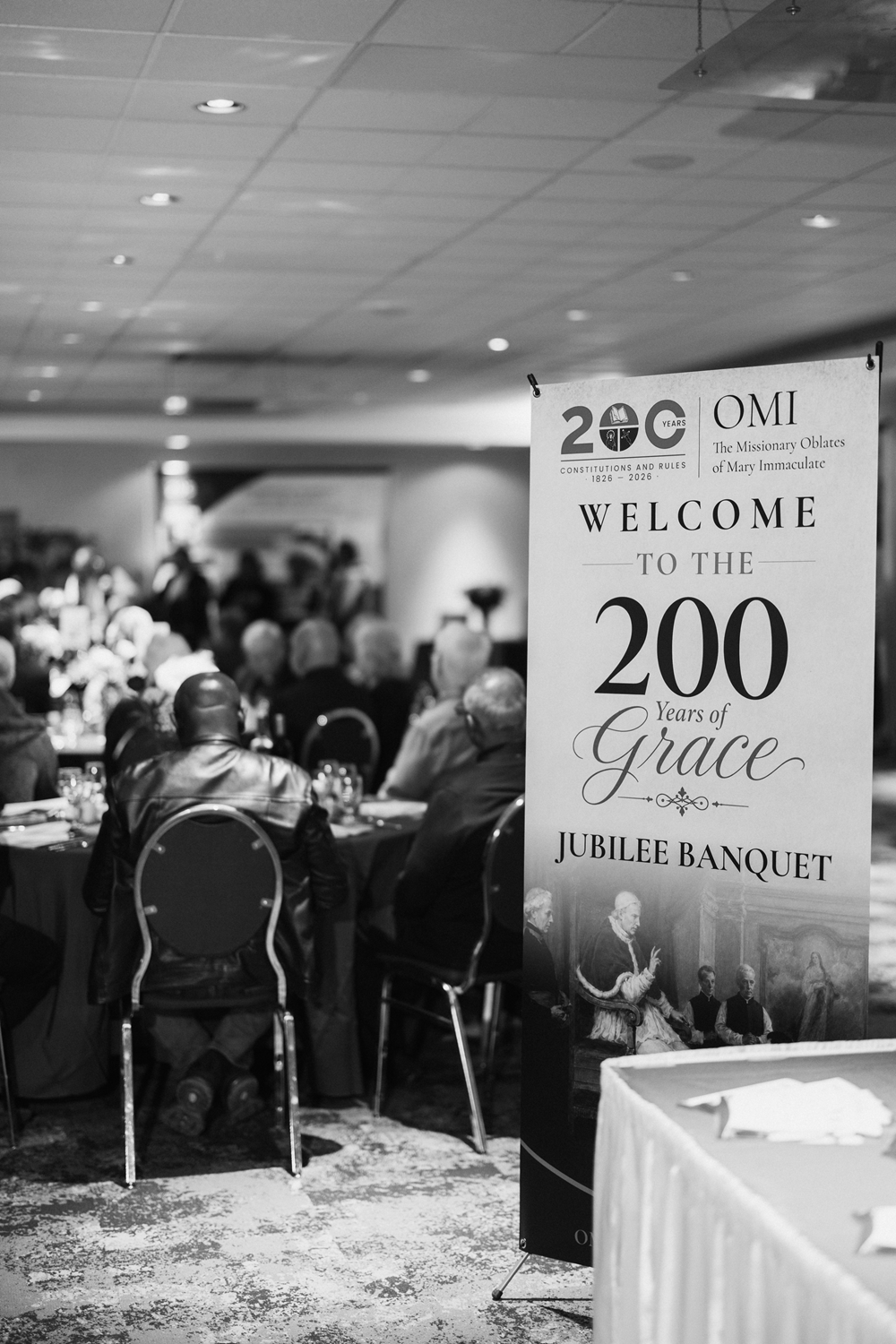
That was the feeling at the OMI Lacombe Canada Jubilee Banquet, an evening that brought together Oblates, Oblate Associates, friends and members of the wider Oblate family to celebrate a remarkable milestone: 200 years of grace, service and community.
For months, we prepared for this celebration. We had photographs to find, stories to uncover, memories to preserve, and countless details to bring together. The banners, the notable Oblate displays, the tree of remembrance, the banquet program, the audiovisual displays and the extensive visual timeline were all created with one purpose: to honour the extraordinary journey of the Oblates and the people who have shaped it.
But something happened that evening that no amount of planning could have prepared us for.
The history came to life.
More Than Names and Dates
One of the most ambitious undertakings leading up to the Jubilee was the creation of a visual timeline documenting 200 years of Oblate history.
It was an enormous project, one that required digging through archives, gathering photographs, connecting with people across generations and discovering stories that might otherwise have remained untold.
The result was much more than a collection of historical milestones. It was a visual journey through two centuries of faith, courage, sacrifice, friendship and service.
And while the timeline told us where the Oblates had been, the people gathered at the banquet reminded us why that history matters.
Throughout the evening, guests paused in front of the displays. Some recognized familiar faces. Others pointed out places they had served or people they had known. Conversations began with a photograph and unfolded into memories, laughter and stories shared between old friends.
For one of the organizers, who has worked with the Oblates for nearly 16 years, the project was an opportunity to discover how much more there was to learn about an organization she thought she already knew so well.
Perhaps that was one of the greatest gifts of the Jubilee: the opportunity not simply to look back, but to see familiar stories through new eyes.
The banners and displays were beautiful. The history was remarkable. But the real magic was watching people find themselves, their friends and their memories within it.
Isabelle Gigault – Project Coordinator
Sonia Jubinville – Archivist
The Joy in the Room
I had the privilege of serving as Master of Ceremonies for the Jubilee Banquet.
It gave me a front-row seat to an evening I won’t soon forget.
Throughout the preparations, I had become familiar with so many names. Names attached to photographs, stories, emails, historical accounts and planning conversations. But that evening, those names became faces. And those faces became people I had the pleasure of meeting, speaking with and getting to know.
There were warm introductions, unexpected conversations and wonderful moments of connection.
And then there was the music.
The energy and joy brought by our Kenyan guests were absolutely infectious. Their singing, their enthusiasm and the spirit they shared filled the room in a way that is difficult to put into words. You couldn’t help but smile, feel the energy and be swept up in the celebration.
Equally moving was the presence of the Indigenous drummers, whose powerful rhythms and voices brought another deeply meaningful dimension to the evening. Their contribution was a beautiful reminder of the relationships, traditions, and cultures woven into the Oblate story, particularly here in Canada.
Together, these musical expressions created something truly special. Different voices, different traditions and different ways of celebrating, yet all contributing to a shared sense of faith, gratitude and community.
It was joyful. It was vibrant. And at times, it was deeply moving.
It was also a beautiful reminder that faith can be expressed in so many different ways, across cultures, communities and continents. Music has a remarkable ability to bring people together, even when they don’t share the same language or traditions. That evening, it did exactly that.
For a celebration rooted in 200 years of history, there was something especially meaningful about experiencing that kind of joy in the present.
The Oblate story is not something that ended generations ago. It continues to unfold, in different places, through different people, with the same spirit of community and service.
And that evening, you could feel it.
A Room Full of Stories
One of the most moving parts of the evening wasn’t something written into the program.
It was watching people reconnect.
There were embraces between friends who hadn’t seen each other in years. Familiar faces greeted with enormous smiles. Conversations that seemed to pick up exactly where they had left off, despite the passage of time.
Everywhere you looked, there were stories being shared.
Some were undoubtedly stories of ministry and service. Others were simply the stories that come from years of friendship, shared experiences and lives intertwined.
It was a reminder that an organization doesn’t build a 200-year legacy through its accomplishments alone.
It builds that legacy through relationships.
Through the people who show up for one another. Through communities that welcome. Through friendships that endure. Through those who came before us and those who will carry the mission forward.
The visual timeline captured the milestones. But the room itself held something no timeline could ever fully document: the depth of those relationships.
A Future We Shape in Hope
The theme of the Jubilee, 200 Years of Grace – Living Mission Through Community: Celebrating the OMI Book of Life, was a fitting reflection of everything the evening represented.
There was so much to celebrate from the past. Two centuries of remarkable people, places, ministries and moments that have shaped the Oblate community and touched countless lives.
But the evening was never only about looking backward.
It was also about recognizing that the story continues.
The same spirit that inspired the earliest Oblates lives on in the people who carry their mission today, in the communities they serve, the relationships they nurture and the hope they bring to others.
As someone who had the privilege of helping bring this celebration to life, I came away with a much deeper appreciation for the Oblates and their story.
I learned more about their history than I ever expected. I met people whose names I had come to know through months of preparation. I witnessed extraordinary joy, heartfelt reunions and a genuine sense of belonging.
And I was reminded that sometimes, the most meaningful part of celebrating history isn’t discovering what happened 200 years ago.
It’s discovering what those 200 years mean to the people standing beside you today.
Long after the banners have been packed away, the photographs returned to their archives, and the banquet room has emptied, those moments will remain.
The music. The laughter. The embraces. The stories. The people.
Because in the end, 200 years of grace isn’t simply a history to remember. It’s a story of people to celebrate, a legacy to honour, and a future still being written.
And what a privilege it was to be part of it.
By Shanlyn Cunningham