

Convocation 2026
Final Day: From Discernment to Shared Mission
October 1, 2026
Thursday, October 1, 2026 – St. Albert, Alberta
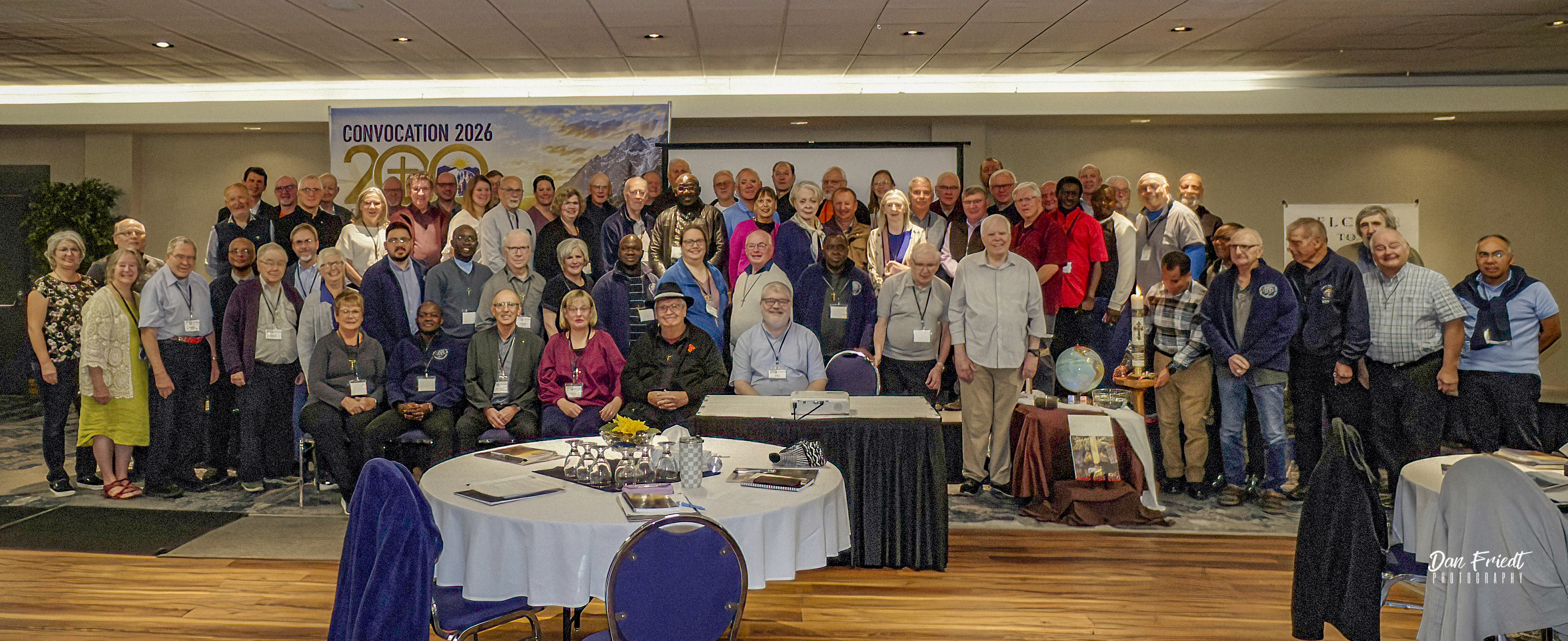
The final day of the OMI Lacombe Canada Convocation brought participants to an important moment in their journey together. After several days of prayer, reflection, listening and dialogue, Oblates and Oblate Associates gathered to recognize the emerging directions that will help shape the future of the Province and its mission.
The gathering was also enriched by the arrival of additional participants, including Bishop Ken Thorson, OMI; Fr. Jacek Nosowicz, OMI, Provincial of Assumption Province; and Fr. Andrzej Jastrzebski, OMI, Vicar Provincial of Notre-Dame-du-Cap Province. Their presence added to the spirit of communion and celebration as the Convocation drew to a close.
Throughout the week, participants had reflected on a central question: Where is God leading OMI Lacombe Canada now? Thursday’s sessions offered an opportunity to bring together the fruits of that discernment and consider how they might be carried forward.
Recognizing the Grace of Consensus
Fr. Gilles Mongeau, SJ, who facilitated the Convocation, guided participants through a reflection entitled Recognizing the Grace of Consensus.
He reminded the gathering that consensus in communal discernment is not simply about everyone agreeing or reaching a unanimous decision. Rather, it is about recognizing together the movement of the Holy Spirit and becoming open to what God may be asking of the community.
Fr. Gilles emphasized the importance of listening to different perspectives, including minority voices, and recognizing that disagreement can sometimes deepen understanding rather than create division.
He identified five signs that can help a community recognize genuine consensus: freedom, truth, communion, peace and renewed energy, and mission.
Importantly, he reminded participants that consensus does not mark the end of discernment, but rather a transition toward shared responsibility. The Provincial and Council now have the responsibility of receiving what has emerged and translating it into decisions, priorities and concrete actions. At the same time, all who participated in the discernment share responsibility for bringing these directions to life.
Seven Emerging Directions for the Future
(Seven Emerging Directions for the Future – PDF VERSION HERE)
Through the collective reflections and conversations of the week, seven emerging directions were identified to help guide OMI Lacombe Canada in the years ahead:
- Intentional Community: Building communities rooted in a conscious commitment to shared life and mission, rather than simply living together by circumstance.
- Collaboration Between Oblates and Associates: Strengthening relationships and shared responsibility for mission, recognizing that the future calls for greater collaboration, formation and openness to change.
- Formation: Providing ongoing spiritual and missionary formation for both vowed Oblates and Associates, preparing them for new ways of living and carrying out the mission together.
- Young People, Young Adults and Young Families: Finding meaningful ways to engage younger generations, recognizing them not simply as recipients of ministry but as active participants in carrying the mission into the future.
- Discernment and Openness to Emerging Mission: Remaining attentive to new needs and opportunities, allowing prayerful, communal discernment to guide the Province toward new forms of ministry.
- Migrants and Intercultural Ministry: Responding to the realities of migration and cultural diversity, while embracing interculturality as an essential dimension of community life and mission.
- Ministry With and Among the Poor: Renewing the Oblate commitment to those who are poor and marginalized, emphasizing relationships of mutual participation and accompaniment rather than ministry carried out solely on behalf of others.
These seven directions reflect a shared desire to remain faithful to the Oblate charism while responding creatively and courageously to the realities of today’s world.
They are not final decisions or a completed action plan. Rather, they represent the fruits of a communal discernment that will now be entrusted to the Provincial and Council for further consideration, while inviting the continued participation and commitment of the entire Oblate family.
Closing Remarks: A Message of Gratitude
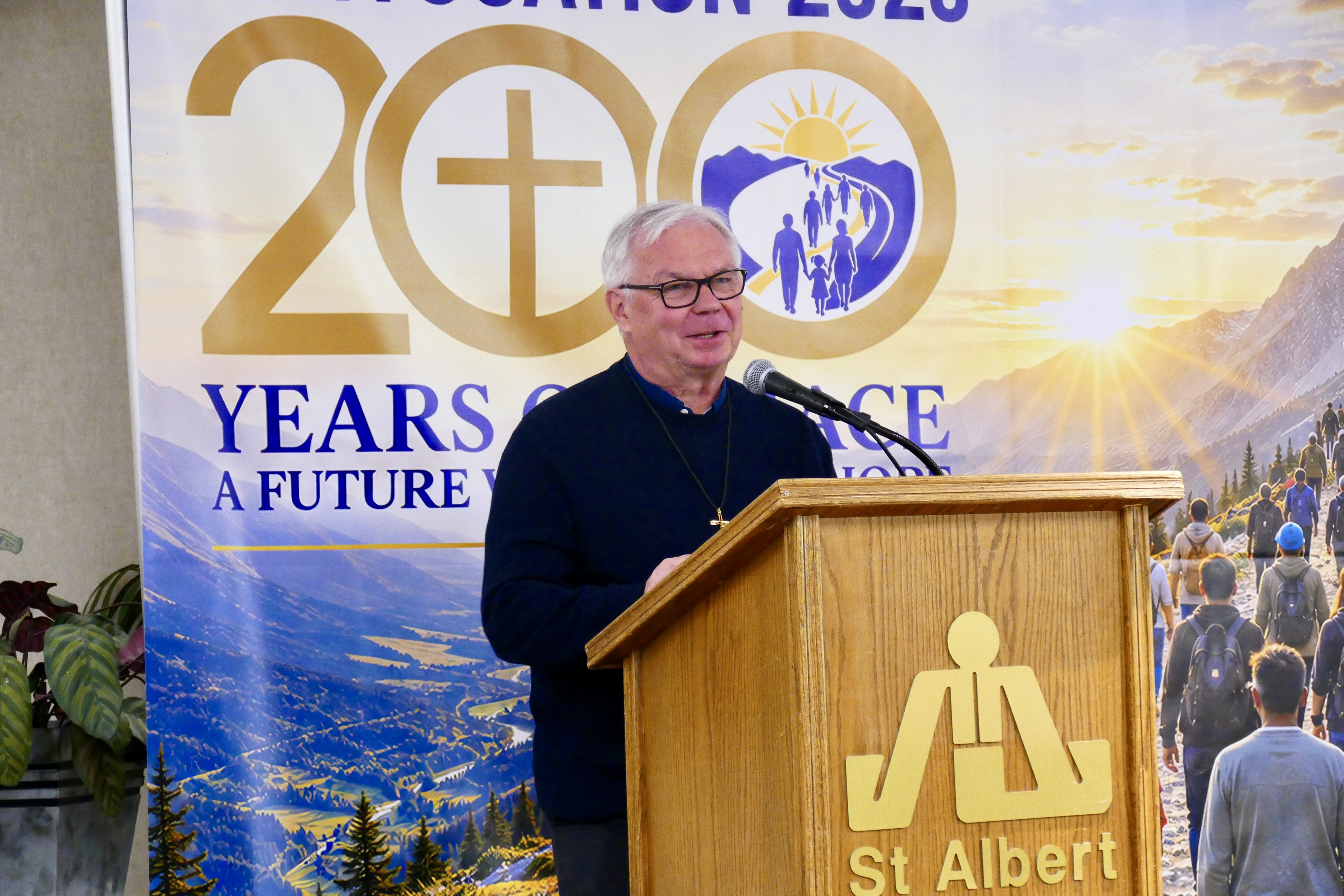
In his closing remarks, Fr. Andrew Stendzina, OMI, Provincial of OMI Lacombe Canada, expressed heartfelt gratitude to everyone who had contributed to the Convocation.
Reflecting on the question that had guided the week, “Where is God leading OMI Lacombe Canada now?”, Fr. Andrew acknowledged that participants were not leaving with every answer. However, he expressed confidence that the gathering had brought greater clarity about the directions in which the Province is being called and the kind of community and mission its members hope to build together.
He emphasized that the value of the Convocation lay not only in its outcomes but also in the way participants had arrived at them — through honest conversation, openness, attentive listening, prayer and a willingness to imagine new possibilities together.
Fr. Andrew offered special thanks to Fr. Gilles Mongeau, SJ, for guiding the discernment process, as well as to the Process, Liturgy and Logistics Committees, the 200th Jubilee Committee, staff and all those who worked behind the scenes to make the gathering possible.
He also acknowledged the Oblates who had travelled from Kenya and expressed particular gratitude to the Oblate Associates and partners in mission, whose presence and contributions affirmed the shared nature of the Oblate mission.
His closing message was one of gratitude for the life and mission shared by all who had gathered, and for the hope that emerged through their time together.
Closing Eucharist: From “I” to “We”
(Closing Eucharist – Homily by Fr. Andrzej Stendzina, OMI – PDF VERSION HERE)
The Convocation concluded with a closing ritual and Eucharistic celebration, during which Fr. Andrzej Stendzina, OMI, Provincial of OMI Lacombe Canada, delivered a homily that brought together many of the central themes of the week.
Fr. Andrew began with a thought-provoking question: “When people look at us, what do they see?” Beyond seeing Oblates, Associates, ministries and different cultures, he invited everyone to consider whether others can recognize Christ in the way they live, serve and care for one another.
Drawing on the reflections of theologian Edward Schillebeeckx, he reminded participants that the Church is called to make Christ visible in the world. No individual can be the Body of Christ alone. It is through community, shared life and mission that Christ becomes present among us.
Fr. Andrew emphasized the inseparable relationship between Christ, community and mission, reminding the gathering that Christ calls people together, forms them and sends them forth — not simply as individuals, but as one body.
A central message of his homily was the invitation to move from “I” to “we.” While individual gifts, initiatives and ministries are valuable, their lasting impact comes when they become part of a mission that can be shared, sustained and passed on to future generations.
He challenged participants to consider how their ministries might become more collaborative, welcoming the gifts of Associates, younger generations, different cultures and partners in mission.
Fr. Andrew also spoke of the prophetic witness of community itself. In an increasingly individualistic world, a community that truly lives the Gospel together can become a powerful sign of Christ’s presence.
Looking toward the future, he reminded everyone that they are not simply travellers, but pilgrims in Christian hope. Although the path ahead may not be entirely clear, there is confidence in knowing that the risen Christ walks alongside them.
As participants gathered around the Eucharistic table, Fr. Andrew offered a final invitation: the end of Convocation was not simply a conclusion, but a new sending forth. The call was not to return to familiar ways unchanged, but to go forward together, carrying the Gospel to those who are poor and to all who need hope.
His homily concluded with a simple but powerful expression of shared commitment:
“Here we are, Lord. Send us.”
A fitting message as OMI Lacombe Canada looks toward the future, grateful for 200 years of grace and hopeful for the mission still unfolding.
From Convocation to Celebration
With the formal proceedings of Convocation concluded, participants enjoyed a well-deserved free afternoon, offering time to rest, reconnect and reflect on the experiences of the week.
Meanwhile, behind the scenes, the conference room underwent a remarkable transformation as preparations began for the 200 Years of Grace Jubilee Banquet.
That evening, Oblates, Associates, partners in mission, friends and special guests would gather to celebrate the 200th anniversary of the approval of the Oblate Constitutions and Rules — an opportunity to honour the past, give thanks for the present and look toward the future with hope.
The banquet provided a joyful conclusion to a week that had been filled with prayer, meaningful conversations, renewed friendships and a shared commitment to the mission.
More highlights and photographs from the 200 Years of Grace Jubilee Banquet will be shared next week.