

Leo pens an Encyclical
What’s in it for Canadians?
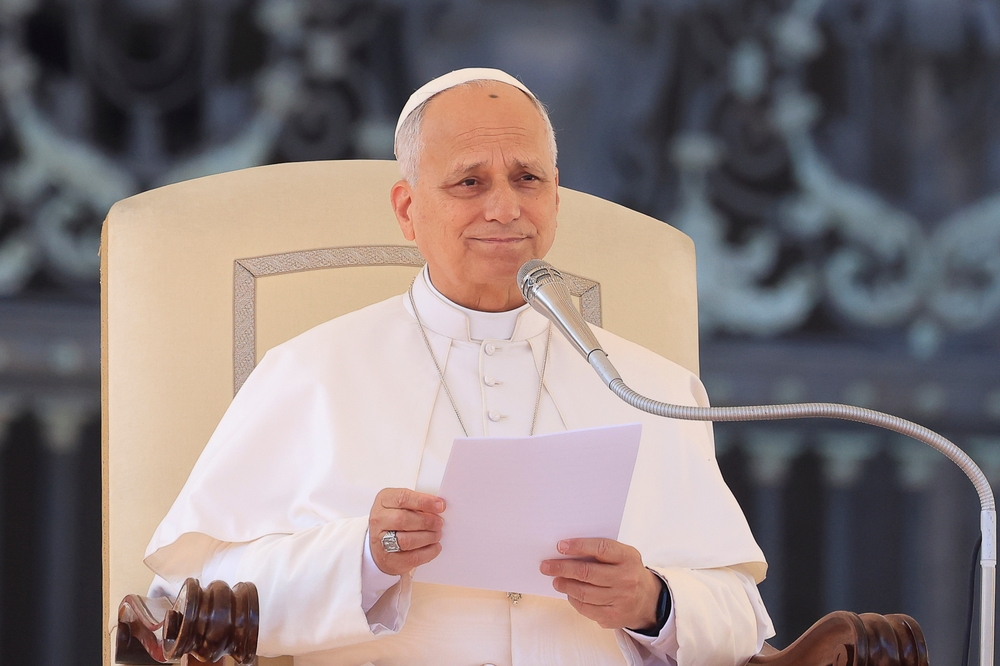
On May 25th after slightly more than one year as pope, Leo XIV released the first encyclical of his pontificate. While centered on artificial intelligence (AI), the text was titled, in Latin, “Magnifica Humanitas” – my preferred translation would be “Humanity in All Its Grandeur.”
While encyclicals are the most authoritative teaching documents of the church, let’s be honest: most Catholics, including busy pastors, do not read them. Few of us will take the time to delve into a lengthy document of 43,000 words, and digest more than seven pages of footnotes.
So how might we grasp the major messages that Catholic leadership is hoping to convey, by understanding and communicating the implications for Canadians?
Separated into major theme areas, each of the headings below might be manageable avenues for further development by homilists and dialogues among lay communities.
From where should good reflection begin?
“Magnifica Humanitas” posits two Biblical options for understanding the challenge of artificial intelligence: the disastrous Tower of Babel (Gen.11:1-9) and the rebuilding of the walls of Jerusalem (Neh 22-6.) The second option of an undertaking with God at the center, is the preferred route to “rebuild relationships before rebuilding with stones” (MH, #8.) Leo, an Augustinian, posits these options much as St. Augustine did – the choice to build Babel (the city of man) or Jerusalem (the city of God.)
Much has been made of Robert Prevost’s choice of name when elected pope. His predecessor of that name, Leo XIII, is best known for initiating the tradition known as Catholic Social Thought (CST). More precisely, his 1891 encyclical, Rerum Novarum, on the topic of the church’s defense of workers’ rights, depicted humanity’s struggles through the disruption caused by the Industrial Revolution. Significantly, the present Leo signed his first encyclical on the same day, 135 years later, with the intention of underscoring and continuing the tradition of CST – delineating how its principles can help guide workers and communities who must now live through the challenges of the Digital Revolution. The fundamental message from both men called Leo (and their church) is concern for the dignity of people in the changing face of technology and work.
Catholic Social Thought
Leo XIV spends two chapters of Magnifica Humanitas explaining the church’s development of “social doctrine” as “a shared discernment” between the revealed word of God and historical realities. Chapter 2 provides a wonderful summary of each of the principles in this magisterium, beginning with the dignity of each human person, and then moving to explanations of the common good, the universal destination of goods, subsidiarity, solidarity, social justice, integral human development and integral ecology. These principles are worthy of our constant reflection since they are often referred to as the church’s “best kept secrets.” For Leo, the current challenges presented by AI can be helpfully untangled by proceeding from these principles – so the remaining text of his message outlines how this can be done.
Why focus on artificial intelligence today?
The church does not desire to forbid – neither demonize nor idolize – AI. Leo is not a Luddite, he does not pronounce AI as evil. Rather, quite symbolically, we see this pope hopes to engage us in reflection and dialogue: here was the first pope to ever present his own encyclical in person, with parts being read at his side by a co-founder of the American AI firm, Anthropic, and other portions read by cardinals and two female theologians.
But to quote the encyclical, “…as with every major technological shift, AI tends to amplify the power of those who already possess economic resources, expertise and access to data…this raises serious concerns, since small but highly influential groups can shape information and consumption patterns, influence democratic processes and steer economic dynamics to their own advantage…it is essential that the use of AI, especially when it touches on public goods and fundamental rights, be guided by clear criteria and effective oversight…ownership of data cannot be left solely in private hands but must be appropriately regulated.” (MH #108.)
Avoidance of “new forms of slavery”
The encyclical describes how contemporary practices of digital content moderation, model training, data labeling, and even the extraction of rare earth minerals can be occasions of subjugation of persons to new forms of colonialism, human trafficking and even slavery. So, beyond denunciation, some solutions are offered: “First, the technological industry and the digital economy need to become more transparent, so that no competitive advantage is built upon hidden exploitation. Second, companies and investors need to adopt clear criteria for preventive ethical verification (due diligence), placing among their priorities the protection of workers, the fight against forced labor and the assessment of the social impact of data-driven business models. Furthermore, digital platforms must cooperate responsibly with authorities and civil society to prevent communication, payment and profiling tools from becoming channels for the recruitment and control of victims. When such efforts converge, the digital environment can be transformed from a space of exploitation into one of protection, prevention and the promotion of human dignity.” (MH # 179.)
In my reading of the encyclical, it seemed novel that Leo (who counts slave owners among his ancestors) not only mentioned slavery as a sin, but wrote of the institutional failures of the church, and earlier popes, to end the practice. “For this, in the name of the Church, I sincerely ask for pardon.” (MH #176.)
To Disarm AI
Leo consciously wanted to employ the term “disarm” because, “it is close to my heart.”
“Disarming AI means freeing it from the mentality of “armed” competition, which today is not limited simply to the military context, but is also an economic and cognitive phenomenon. This entails a race for ever more powerful algorithms and larger datasets, driven by the desire to secure geopolitical or commercial dominance. To disarm means discrediting the assumption that technical power automatically confers the right to govern. To disarm does not mean rejecting technology, but preventing it from dominating humanity. It means freeing technology from monopolistic control and opening it to discussion and debate, therefore making it human-friendly and restoring it to the plurality of human cultures and ways of life. Our task today is not only ethical or technical. It is ecological in the deepest sense, for it concerns a new dimension of our common home. AI is already an environment in which we are immersed, as well as a force with which we must engage. For this reason, merely regulating it is insufficient; it must be disarmed, welcoming and accessible.” (MH #110.)
But not only is the impersonalization of conflict in the tech age a concern – Leo goes on to state that the “just war” doctrine is “outdated” (MH #192.) Given this American pope’s recent disagreement with the U.S. Vice-President over his defense of war with Iran, watch for future elaboration in this debate.
In conclusion, for Leo, conversations about the challenges humanity faces in the digital age must continue. The “fourth industrial revolution” (MH #151) presents many possibilities to make innovation “more civilized and humane.” (MH #164.) But it seems clear that this pope does not fear any possible future AI priest chatbot…even though for $1.99 USD per minute, you can already call up a video avatar of Jesus and request spiritual guidance and prayer companionship! No. For Leo, the challenge of the digital age is to promote humanity in all its grandeur.
Joe Gunn assures readers that he wrote this text without the use of any artificial intelligence.
By Joe Gunn