

Nourished by Christ, Sustained in Hope
Corpus Christi – June 7, 2026
Do you struggle to feel positive when life gets tough? Do you wonder how some people who believe in God have a positive outlook when they are suffering or facing difficulties? What is it they do, that gives them faith, courage and hope? And usually, they remain kind to others.
Today’s feast reminds us WHAT we, as Christians, DO to feel connected to God to a power greater than ourselves, even in tough times. The Feast of Corpus Christi celebrates the Body and Blood of Christ, in the Eucharist, which we usually receive at Mass.
You might doubt, sometimes, that the bread and wine really is the Body and Blood of Christ. That’s OK: you might remember when Jesus met the apostles after his resurrection: it says, “When they saw Him, they worshiped Him; but some doubted.” Mat 28:17. We are invited to continue with faith and, after some time, belief will follow.
Corpus Christi communicates to us that Jesus wants to be close to us, not far away in the “heavens”, but humbly appearing and nourishing us through bread and wine. The physical bread and wine symbolise many things, but we can all agree that bread stops hunger and wine helps us relax a little (in moderation!).
When young people come home and get spoilt by mum preparing a beautiful meal, it helps them feel secure and valued: we get energy to go back out and kick a few goals in the world outside: because we know we have a place to run to when life falls apart.
In the same way, the Eucharist comforts us and reminds us that we belong to a big family, even if our smaller family falls apart. Many people come to the church building for a time of silence and peace, a time to reflect and feel God’s presence. The little red lamp near the Tabernacle always reminds us that we are not alone: Christ is with us right there and then.
I’m sure all of us have experiences of our mums and dads preparing, for us, something unexpected, or sneaking a box of chocolates secretly into our luggage that we only discover when we reach our destination. This foresight and thoughtfulness comforts us long after the event, because it reminds us how much we are loved by our parents (our Guardian Angels).
Likewise, Jesus did the same thing with the Eucharist! By thinking ahead, Jesus left us a spiritual closeness that nourishes us in tough times every time we receive or attend Mass.
As a missionary and a priest, it reminds me that the presence of Christ in the Eucharist must be especially reciprocated by religious to NOT be in a rush to leave after Mass. But to remain present and available for people to share their lives and ask for guidance, just as Christ is patiently present in the churches. Here are some simple images of the Eucharist:
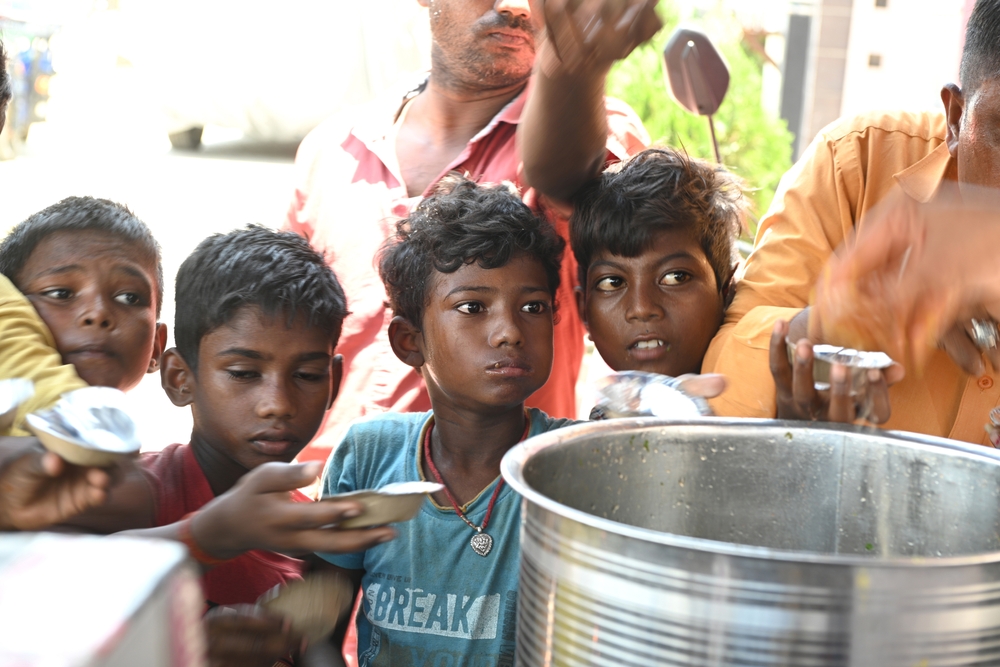
Imagine a child going to school with no lunch. A friend shares their sandwich. That food gives strength and joy. So, too, Jesus shares Himself in the Eucharist to give us strength for life.
Think of a long walk where you get tired. A parent gives you a snack to keep going. The Eucharist is our “journey food” that helps us keep walking to heaven with Jesus.
It is always sad to hear that someone has stopped believing in the real presence of Jesus Christ in the Eucharist; reducing it to just a symbol of Jesus at the Last Supper.
Perhaps, for some, it’s a problem of logic and science; but, for others, it may also be due to a loss of relationship with the Church. Jesus himself said love God and love your neighbour. St Cyprian said: “No one can have God as Father who does not have the Church as Mother.” Later, St Augustine & Pope Benedict XVI said “to love Christ is to love His Body, the Church.”
I can understand why many people walked away from the Church due to bad behaviour and scandals by priests and Bishops. But, for your sake, don’t lose the presence of Christ because of others: the Church belongs to Christ and the community, not to the Bishop or priests. A strong commitment to the Church creates an enduring belief in the Eucharist.
One great dimension of the Eucharist is its gentleness: it is non-judgemental, non-violent, humble and, yet, very relevant. Christ, through the Eucharist, reminds us all that God is bigger than our mistakes and weaknesses. And we come to believe it through the Eucharist:
Normal food goes through the stomach, breaks down and becomes part of us. The Eucharist, however, does not break down: rather, you and I change and become part of the Eucharist. The more we become like Christ the easier and stronger we can believe in the Eucharist.
As St Paul’s 2nd Reading reminds us: through the Eucharist, we enter into communion, or belonging, with God, our community and family; even our deceased family members. The Eucharist assures us that we have a future, that we are loved, and that we are needed.
By Gerard Conlan, OMI