

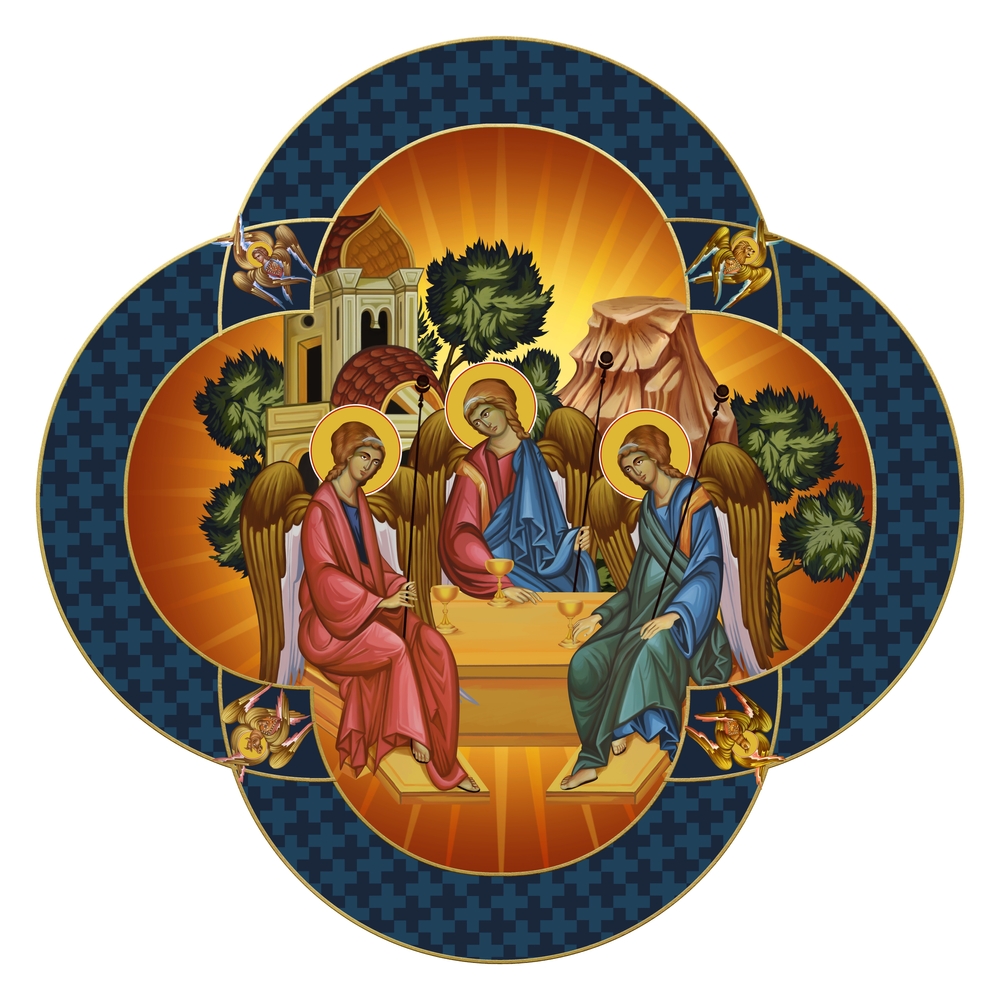
The Trinity: A Pathway to Healing and Peace
Holy Trinity – May 31, 2026
Many of us, today, are kind of “busy”: either working several jobs or doing extra work at home to reduce our expenses, or both! When we are busy, we get tired: and the risk is, that, we also become grumpy, angry and say words we wish we could take back. On holiday last year, other people a certain event had a singing competition. One song was challenging: If I could Turn Back Time (by Cher). It’s a lamentation that “I would take back those words, that I said…”
How are our relationships? Are we struggling to recover a wounded, or broken, relationship? Are we in a situation where one part of the family doesn’t talk to the other? It is sad to see at funerals. And the separation is subconsciously painful, regardless of say “I’m OK not to talk.”
That’s why the Second Reading might sound good, but be far from my reality, and uncertain how to get there. Perhaps we might feel annoyed because it seems impossible for us.
However, today’s Feast of the Holy Trinity provides us with a pathway that will restore or strengthen our relationships, and allow us to live with peace. God is a mystery and, often, relationships seem like just as big a mystery! We ask ourselves, how did we end up here?!
Through the teaching of the Holy Trinity, God is offering us, leading us, into the Divine love. God is community: the perfect community where the three persons Father, Son and Spirit, are in harmony with a common direction, communication and in submission to each other.
Here, by submission, it does not mean lower than the others: I mean the humility that allows a consensus to be reached; similar to the synodality that Pope Francis introduced: listening.
If I asked each of you to explain what you think the Holy Trinity is, like I did to my mother this week, it might be difficult to explain. And, in a sense, that is an answer in itself: it is a great mystery, that even the experts in theology still struggle to explain. If we could explain it fully, God would no longer be a mystery and we would spend our time trying to control God. Ha, ha.
But what we can talk about with some authority is how God has acted in our world; and our three readings help us walk those actions like a journey. And they act like a model for building solid relationships and the steps required to heal any damaged relationships.
First step, Mercy: the Book of Exodus captures the key action of God the Father in our world.
Second step, Love: the Gospel expresses the desire of God to save us all from despair and evil.
Third step, Unity: we need the peace mediated by God the Holy Spirit; Paul captures the fruit of love, living in peace; because we experience someone’s self-sacrifice for us.
The actions of the Holy Trinity are marked by fatherly concern, compassion and hospitality. And the actions of God through the three steps outlined above, empowers people so they have the capacity to participate as co-creators with God. The following story is a good example:
At a big stadium some years back, a large athletics competition was happening between many schools. The competition was fierce in the 1,000 metre sprint. Unfortunately, in the last 100 metres the person coming second tripped over. Instead of continuing, the girl in front stopped and turned back to help up the other runner. Together they walked to the finish line. When the other runners saw what had happened, they all joined arms together and everyone crossed the finish line at the same time. In the stadium, everyone went quiet for a moment, before everyone stood up and applauded.
We see the mercy shown by the leading runner, then we see her sacrifice her lead, and finally we see the peace between all the runners leading them to be a community of winners.
So, this week, as we reflect on our relationships, can we think how we might turn back time, as God has often turned back for us throughout history. The Holy Trinity reveals God as community, that is always ready to open its doors to others. This is the mission of our Church: which is done to some degree in every parish: but there are some parishes outstanding in their hospitality and warmth… and the peace that flows from that.
Is there an opportunity to show mercy to someone we have cut off? Or, are we able to make a sacrifice for someone we have been separated from for a while? Can we reflect if we are too competitive, and make others feel left out?
As Frank Pittman notes in his brilliant book on masculinity, Man Enough (1993): “Competitors, who are always setting up contests and keeping score, lead stressful lives and may have trouble relaxing. And they might be obnoxious.” Pittman also notes that an excessive competitive spirit in men often stems from their not feeling blessed by their fathers as boys: sub-consciously, through competitiveness, they hope dad will be impressed and bless them.
Let’s look for ways to bless each other with words of praise (a form of mercy), and acts of sacrifice to demonstrate to the other person that they’re welcome back. May God give courage!
By Gerard Conlan, OMI