

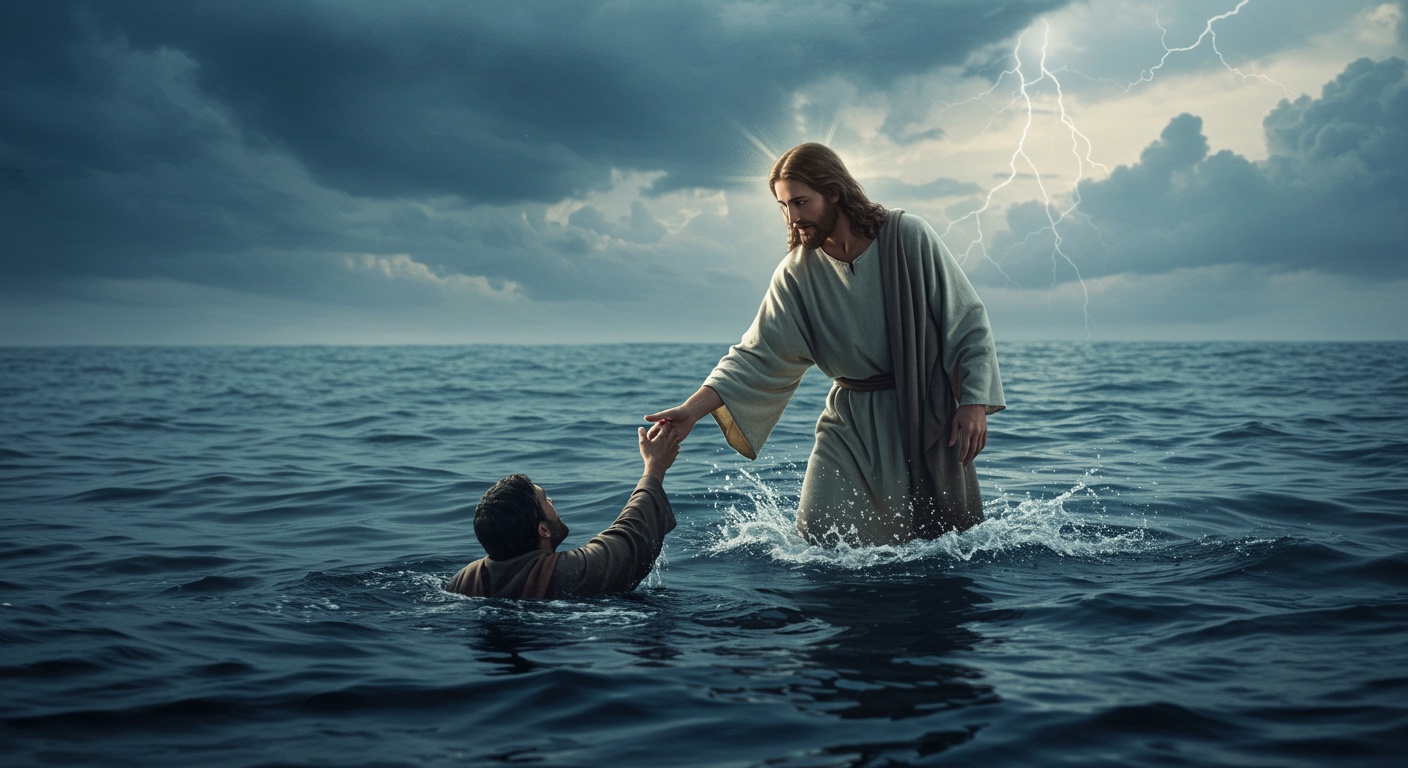
Baptism: From Isolation to Belonging in Christ
Baptism of the Lord – January 12, 2026
In our community room the other day, an innocent question about how to be perfect like the Father … developed into a back and forth about when do we lose our perfection?
It’s an interesting place to start the homily with, because the big focus in the past was the washing away of original sin. This is why, in those first 250 – 300 years after Christ, many adults put off baptism until close to dying, because new sins, after baptism, was the end!
Thankfully, in 325, the Council of Nicaea affirmed and formalised the Sacrament of Penance. After which, infant baptism began to be more widespread. So, when did we get original sin? Is it at the moment of conception? During pregnancy or after birth?
In Christian theology, original sin isn’t something that “arrives” at a particular stage but as a condition inherited from Adam and Eve’s disobedience. And what did Adam and Eve’s disobedience cause? Sin breaks a relationship and isolates us from the community.
In simple terms, we could say Adam and Eve caused all people to be isolated from God’s perfection: which exposed us to failure, pain and hardship. And that has an impact on everyone born into the world: we are wounded in body or mind, by violence, disease, chemicals and the imperfect parents who raise us (including our siblings).
In Catholic theology (St. Augustine, etc.) we say that original sin is present from the very beginning of human existence =conception! In a practical sense I like to think it is when we are born; but, even in the womb we can be subjected to violence and poisoning by chemicals.
I’ve told the story before about Fr Richard Rohr OFM, on the Gospel text where Jesus says (in the Sermon on the Mount): “You must therefore be perfect, just as your heavenly Father is perfect.” The context is this: Jesus taught that people must also love enemies, not just friends.
A wise American Indian Elder said: “but it’s easy, Richard, God’s perfection is God’s ability to embrace everybody’s imperfection.” Scholars also agree the Greek word for “Perfect” (teleios), doesn’t mean “flawless”: it’s the idea of being complete, whole, mature, or fully developed.
So, Jesus is calling his disciples to a fullness of love and integrity, not to a kind of impossible perfectionism. In simple terms, Baptism can be seen as the pathway to Jesus’ perfection: making us once more whole, instead of remaining broken by what the world has done to us.
It is psychologically valuable for family and friends who participate in the Baptism, just as it is ontologically important for the person. Ontological means: changing a person for ever at their deepest level. This happens likewise through the validly celebrated sacrament of Holy Orders. Although we cannot see the ontological change, we can see the fruit of that change.
Perhaps we can liken ontological to the feeling a child has when they know their mother and father. Those who lose their parents have a strong yearning to find them. When an adult, more especially, receives Baptism they often experience it as an emotional experience that registers deep contentment in the depths of their being.
For people baptised as children, it may not be so emotional at the time, but they grow up knowing they are part of God’s family: a place of belonging, no matter what happens.
It is through Baptism that we know we are full members of this community that is trying to build the Kingdom of God on earth. Sadly, much of the Church teaching is about getting people into Heaven after death: but the real desire of God is that we build the Kingdom of God here on earth with God as our guide and helper. If we live in a way that builds the Kingdom of God on earth, we need not fear: we will go to Heaven after death.
These days, many people are ambivalent about the Church: not sure if it’s worth the effort of being a faithful and faith-filled member of it. This becomes more of a question and struggle the more economically independent and comfortable we become.
The Baptism of Jesus Christ is not just a moment to reflect on the life and progress of Jesus, but a moment to reflect on our own baptism. How have we responded after being invited into the great love affair of God with us?
Fr Ron Rolheiser OMI shares that St Peter’s Baptism was the conversation in John’s Gospel where Jesus asked Peter if he loves him three times and then tells him: “when you were young you did what you liked, but when you are older you will go where others take you.”
Experienced parents recognise the truth in what Jesus says to St Peter: after having children, the life of parents is no longer “free”. Their decisions are based around the needs of their children. Yet, most parents, though tired and grumpy at times, have a great sense of meaning and joy in their lives. God, likewise, has much joy because of you: You are my chosen one, in whom I am well pleased. Go on with life knowing God is proud of you!
By Gerard Conlan, OMI
