

Bishops of the Continent Defend the Rights of Migrants
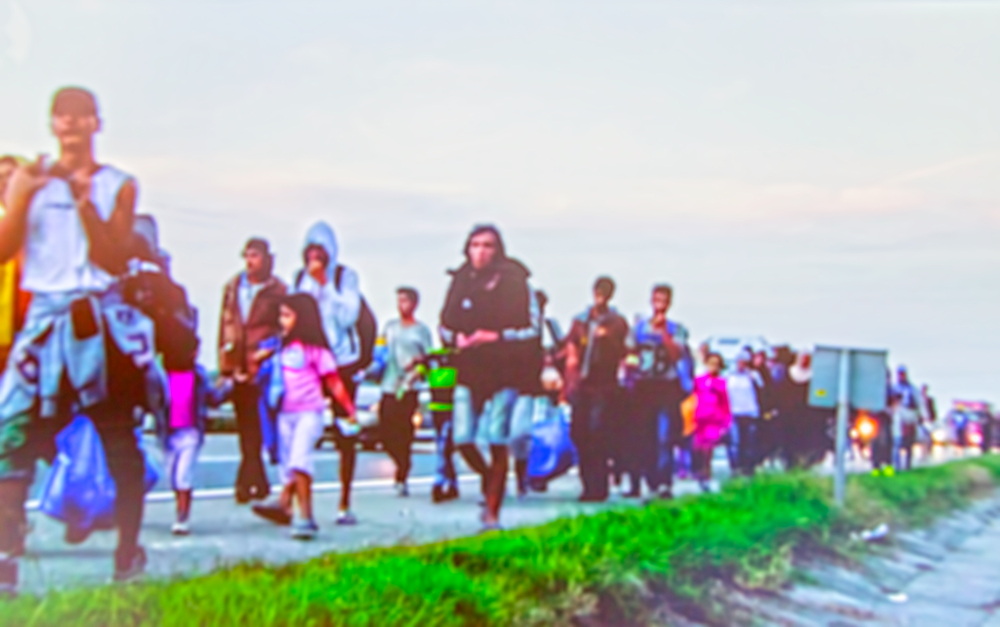
Bishops from across the Americas have joined together to issue a call for the church – and policymakers – to defend the rights of migrants. The February 17 statement released in English, French and Spanish, and signed by the Leadership of the Episcopal Conferences of Canada, the United States, Latin America and the Caribbean, decried “the extreme vulnerability of migrants who live, travel through, and seek a future in our countries.”
The statement read: “we affirm clearly: no migrant is a stranger to the Church. In every person who leaves their homeland seeking safety, opportunities, or dignity, we recognize a brother, a sister; we recognize the very face of Christ on the move. Human mobility cannot be reduced to a merely political or economic issue; it is a profoundly human reality that challenges our Christian conscience and the ethical responsibility of nations.”
Directly, the statement reads, “We invite civil authorities to promote policies that safeguard the lives, rights, and dignity of migrants. We recognize the responsibility of States to regulate migration and ensure the common good; however, we reiterate that all legislation must place at its center the inalienable dignity of the human person and the respect that person deserves.”
Acknowledging that people on the move cross “countries, systems and borders,” the bishops promised to strengthen their continental coordination “so that, from the place of origin to transit and final destination, the Church may be a concrete sign of hope, a place of welcome, and protection.”
The focus on migration concerns arose during several days of in-person meetings in Florida, where executive members of the bishops’ conferences discussed a range of issues. It is hardly surprising that this theme rose to prominence, given the hardening of attitudes in North America, and the economic and social tensions evident in South America and the Caribbean.
Pastors in the Global South face migration dilemmas and challenges constantly. The UN’s International Organization for Migration (OIM) reports that the number of migrants in Latin America and the Caribbean, both regular and irregular, grew from 14.3 million in 2020 to 17.5 million in 2024, representing an increase of 23%. This increase was marked above all by the crisis in Venezuela. By May 2025, there were nearly 6.9 million Venezuelan migrants and refugees. And migration is often hazardous – in 2024, record numbers of lives were lost in transit: the highest figures ever recorded on these routes since OIM monitoring began in 2014. Nonetheless, it is important to note that of this overall total of migrants, around 80% moved within the region itself, mainly in South America. A much smaller number tried to cross into North America.
The bishops’ statement was released only a few days before the State of the Union Address, where US President Donald Trump declared the border is now “secure,” enemies are “scared” with the result that zero “illegal aliens” have entered the US in the past 9 months. While the rather long-winded disquisition railed against “drug lords” and “murderers” who have managed to infiltrate the USA (only under the administrations of his predecessors, apparently) there was no mention of the two US citizens killed by ICE agents in Minnesota, nor other violent abuses of authority. However, the President did promise a new law designed to ban undocumented persons from receiving a commercial driver’s license since, he claimed, many undocumented immigrants lack the English literacy required to read basic road signs regarding speed, danger, and direction. In contrast, the November 2025 “Special Message on Immigration” of the US bishops’ was “special” because it marked the first time in 12 years such a text was released during an in-person Plenary meeting – with a vote of 216 votes in favor, 5 votes against, and 3 abstentions. The bishops opposed “the indiscriminate mass deportation of people” as well as “the vilification of immigrants” and it prayed for “an end to dehumanizing rhetoric and violence.”
Canada is not immune to the hardening of attitudes towards migrants. A September 2025 survey by Nanos research reported that “Canadians are more than twice as likely to support (45%) or somewhat support (26%) reducing the number of new immigrants into Canada, compared to those who oppose (9%) or somewhat oppose (17%). Similarly, over three in five Canadians support or somewhat support (33% each) the government reducing its target for new temporary residents that it plans to accept.” It is noteworthy that Canada’s population soared by almost 2 million people in 2023 and 2024, thus placing various strains (as well as unanticipated benefits) on new arrivals as well as their new communities of residence.
Parliament’s Official Opposition has advanced a motion, to be voted on in early March, that would restrict health care benefits to asylum claimants whose applications have failed, and push the Liberal government to “pass policies to immediately expel foreign nationals convicted of serious crime in Canada.” Canadians may recall that, in 2012 when then-Prime Minister Stephen Harper announced the elimination of the “Interim Federal Health Program” to asylum seekers, doctors and health care workers across Canada staged protest walkouts. Later, the Federal Court struck down such changes, saying such treatment of refugees was “cruel and unusual.” More recently, Prime Minister Carney has announced that by May 2026, asylum-seekers will be required to pay a $4 flat fee for prescriptions. And in Alberta Premier Danielle Smith’s planned referendum next October, fully five of the 9 (or 10?) questions will address citizen appetites for cutting services to newcomers. Nonetheless, CBC reported more non-permanent migrants moved out of Alberta than arrived, indicating that the curve has already been bending before any provincial interventions or referendums.
The Canadian Council for Refugees, along with over 180 supporting organizations across the country, recently launched the We’re Better Together campaign. These resources include message guides for initiating positive discussions about newcomer realities, building support for an inclusive Canada. As one concrete action, the Refugee Outreach Committee of St. Joseph’s Parish in Ottawa prepares positive messages about newcomers for every weekly bulletin.
Our bishops urged all the People of God in the Americas “to live our unity in a concrete and daily way: in the generous welcome of migrants, in the defense of the most vulnerable, in respectful dialogue even amidst differences, in the patient building of bridges. May our parishes, communities, and families be visible signs that fraternity is possible, and that the Gospel continues to be a transformative force in our societies.”
By Joe Gunn
Joe Gunn is a volunteer with the Refugee Outreach Committee of St. Joe’s Parish. When a staff person at the CCCB, he served continental meetings of bishops in Florida, Brazil, Quebec City and Vancouver.
