

Jesus invites us to walk through walls as we bring the light of love: our Wounds can bring real change for others
Second Sunday of Easter – April 12, 2026
Happy Easter! As baptised people, we are united with Christ: so, we are now, also, Resurrection people. But what does that mean? Our three readings help us understand: John 20, reveals the source of Resurrection life: the risen Jesus the Spirit appearing to the fearful Apostles (and others), which is experienced as deep peace.
1 Peter 1, describes the inner transformation that Resurrection people experience: an active hope, faith that can withstand negative experiences but, also, deep joy that cannot be described. Acts 2, then reveals concrete expressions/ examples of how Resurrection people can be recognised: small communities that reach out to with generosity to the wider community.
I remember Fr Michael Twigg OMI advising me 20 years ago when starting a youth group that, unless the group has some outside service to the community, it will fall apart after a short time: initially the youth members enjoy each other, but they quickly grow tired of each other.
But, if the group regularly reaches out to serve the community, (eg. visiting elderly homes, taking food to the street people, etc.), they will discover their goodness and build an unconscious relationship with God; creating, as a result, more meaningful relationships between themselves: able to discuss personal ‘issues’ that builds unity, meaning and community.
In the time after the Resurrection: the Church was also persecuted. But, the methodology of Jesus broke through human barriers and transformed the world. Of course, it took time and many examples of courage and martyrdom by our Saints.
This year, our Oblate congregation celebrates the 200th Anniv. of our foundation. St Eugene de Mazenod, our founder, described the Church of his time as being cruelly ravaged. By changing his life (preaching in the local language and kindness in reconciliation), he transformed people.
Today, too, the Church has been cruelly ravaged by scandals, materialism and poor examples of Christian life by members acting badly. People no longer trust Religious as a group: they only trust individuals who demonstrate, through suffering and sacrifice, availability for them. In other words, each of us must be a meaningful (helpful) presence of Christ for others.
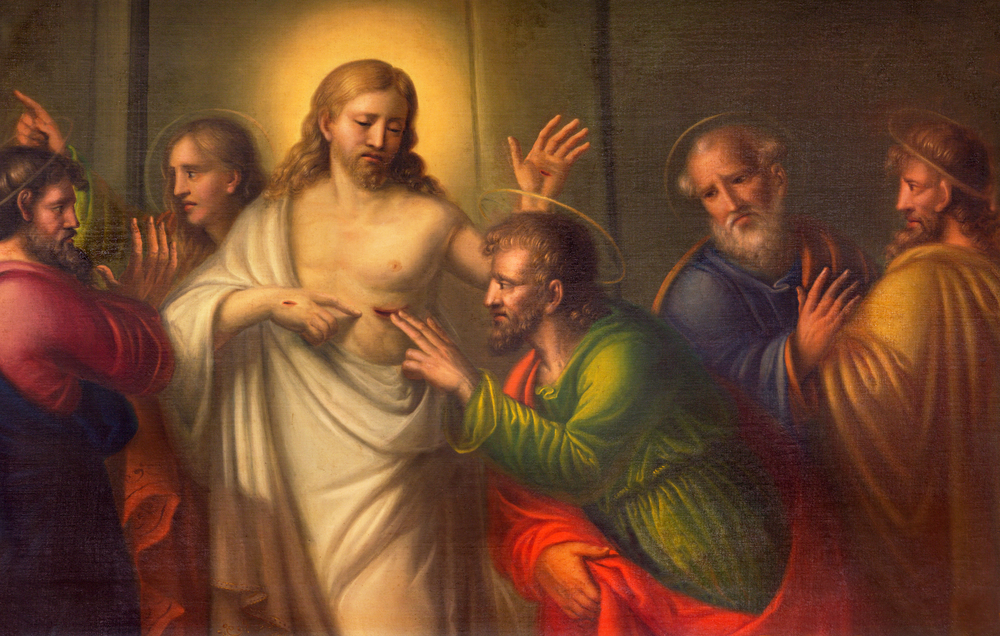
This may sound too BIG for us. However, we are not called to transform the world, but to transform my brother or sister next to me. The model of parents is helpful: they focus on their children who, often, only realise their parents’ deep love for them after seeing their parents suffering for them. This is the lived meaning of Thomas placing his hand in the side of Jesus.
How did Jesus do it? Here are five key steps in today’s Gospel:
- Jesus walked through locked doors: can we be generous and reach out to people, rather than waiting for them to come to us? Especially those suffering mental health issues: I see this in our youth group as they practice Sisi kwa Sisi (us for us): they organise to visit a member is struggling with debts and challenges: they bring food, money and presence.
- Next, Jesus did not condemn anyone: let us also come to people with words of peace! Rather than words of correction or criticism. First, help people feel loved and appreciated. Look at them, rather than at their sins. After a person feels loved/ valued, they will choose to change by themselves, or ask for help to do so.
- Keep coming back to visit: the first time Jesus came, Thomas was missing. Keep visiting: don’t make our visits a rarity.
- Don’t be ashamed of our ‘wounds’: let us be vulnerable to allow our past ‘mistakes’/ ‘failures’ become a pathway that leads others to understand that change is possible: our past mistakes do not have to define our future. Jesus didn’t appear to everyone to reveal his wounds, only those who needed to see: same for us, be discrete with our ‘wounds’.
- Be ready to forgive: Jesus breathed on the Apostles and said: “Receive the Holy Spirit. For those whose sins you forgive… for those whose sins you retain…” Each of us can forgive; and each of us can help bind up a sin like addiction.
The foundation of a Resurrection life begins with an encounter with Christ: Christ appears: Hearts change: Lives change. God needs us, today, to provide those Christ encounters.
Our world may seem frightening right now, but it is an exciting time for Christians. We are at a point of inflection: a moment of opportunity to change: a crossroad. We need to choose which direction we will take: if we choose with courage, our world will be transformed. If we choose to continue as we usually do, we will live in fear as violence increases around us.
Jesus Christ was a such a crossroad, was an inflection point: are you now? Or will you be?
Christos Anesti! Christ is Risen. Happy Easter!
I encourage you to look for the documentary series called: the Butterfly Effect, it revisits key inflection points in history: moments where a small event or decision sends the world swinging in a completely different direction. Each episode focuses on a crossroad in history, showing how a seemingly small trigger leads to major global consequences.
By Gerard Conlan, OMI