

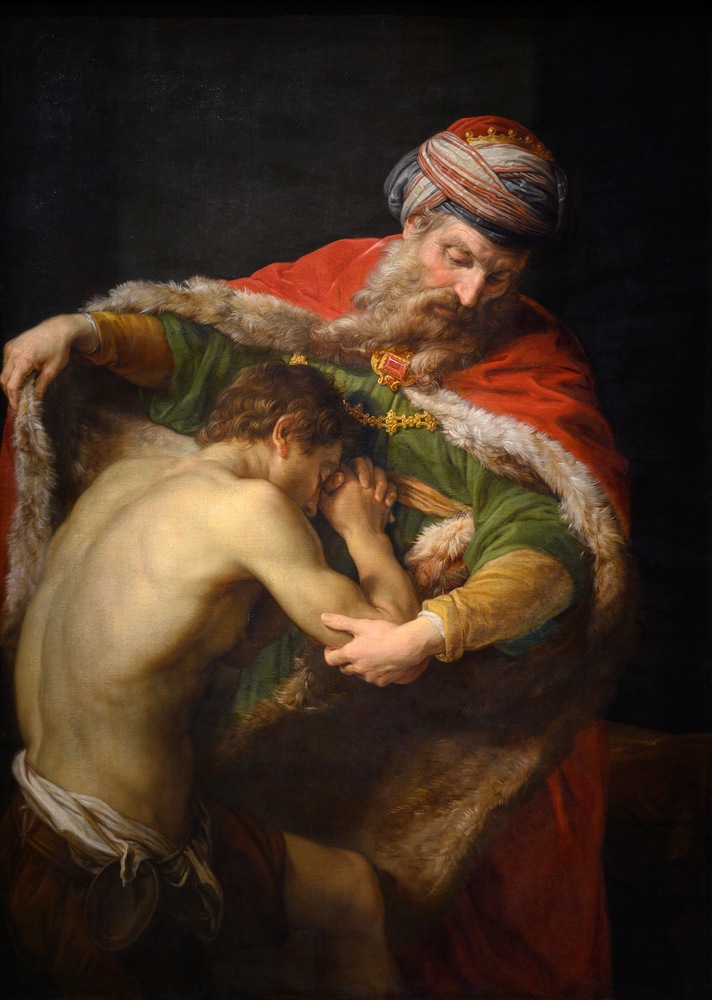
Mercy is more than forgiveness – it is the rebuilding of broken lives
Fifth Sunday of Lent – March 22, 2026
In a small town, there was a potter who made beautiful clay pots. One day, a young woman accidentally broke one of his finest creations. The townspeople dragged her to the marketplace, shouting, “She must pay! She ruined what was precious!” They placed the broken pot before the potter, expecting him to condemn her.
The potter looked at the shards quietly. Then he picked up the largest piece and said, “Who among you has never broken something? Step forward and cast the first stone at her.” The crowd fell silent. One by one, they remembered their own mistakes—spilled water, cracked dishes, shattered pots—and slowly walked away.
When they had all left, the potter turned to the woman. “I do not condemn you,” he said gently. “But learn from this—handle what is entrusted to you with care.” Then he gathered the broken pieces and, with skilful hands, reshaped them into a new vessel, more beautiful than before.
Do you, like me, sometimes find yourself very interested in the news about what other people have done wrong? It’s a great way of distracting us from our own mistakes. I think somewhere in Catholic teaching, and even in the Bible, it says, do not take pleasure in the death of the wicked man; and do not laugh at the misfortune of others. Are we guilty?
God is inviting us, today, to become like the potter and rebuild what is broken, especially, in the lives of those close to us, but even the strangers who stumble into our lives. Sometimes we can rebuild using our skills; other times, the gift of our time is needed to listen and laugh with them; and, at other times, we can be called to share a little of our own mistakes from the past.
The readings highlight the mercy of God (1st Reading) and the mercy of God as Jesus (Gospel). Mercy is not just about forgiving. As we hear in the story above, and first reading, today: mercy is also about rebuilding. Did you know that most large-scale conflicts and wars are usually started by men? As we look around the world, today, I think we can see it is true.
Psychologists and spiritual teachers, can confirm that the loss or absence of a healthy, respectful father-son relationship, when growing up, can lead to violence in later life, or even in a man’s younger life. Perhaps this partly explains the increase in domestic violence in many societies?
The father wound, as it is often referred to, is the unfulfilled yearning of a boy for his father’s attention, guidance and encouragement: it is so important for boys to hear their father say, every so often: I’m proud of you! If not in words, then it must be expressed demonstrably.
However, it’s never too late to rebuild, or restore, a father-son relationship: just a little attention each day, week or whenever possible to meet. Such relationships require deep trust & perseverance. Like the story of the Little Prince.
I also believe that the older the son is, when a rebuild is needed, the greater the importance to use less words and, rather, to create opportunities where the father takes initiative to empower the son with skills through working together, or enabling them to get a learning opportunity.
One reason for this is the increase in family and community breakdowns. Another reason is the absence of volunteering opportunities, or the lack of interest by parents in encouraging volunteering. Volunteering can, and should, begin at home, where the father takes time to instruct the son in essential work around the house and give it as a responsibility
Despite the protests and arguments that usually come, it is worthwhile because the father is able to give the son one of the two essential gifts a boy needs before leaving home. The first is essential life skills. The second is the affirmation: you are strong enough; I believe in you.
Volunteering outside the home, helps young people develop social skills, receive praise for their kindness, and often develop new skills or develop an awareness of what they might like to do in later life.
Although parents try to prevent their children from making mistakes, which is good; wise parents also give their children increasing freedom as they grow older: this gives them practice at making choices, making mistakes and facing the consequences, but hopefully small ones!
What is essential for all of us, but especially for young people, who have ‘sinned’ is us to know that we are still loved despite our failings. Punishment, if needed, must be constructive: to help put a new heart into others. Lent is a time to recall the past, not to dwell in it, but to let it humble us: we can rebuild and restore lives better (more beautiful) than before, including ourselves.
By Gerard Conlan, OMI
