
Striking the Rock Differently: Letting Living Water Flow
Third Sunday of Lent – March 8, 2026
Breaking Barriers, Finding Healing: when life feels barren and blocked by ‘rocks,’ God invites us to strike differently—with humility, openness, and love—so that living water can flow and heal broken relationships.
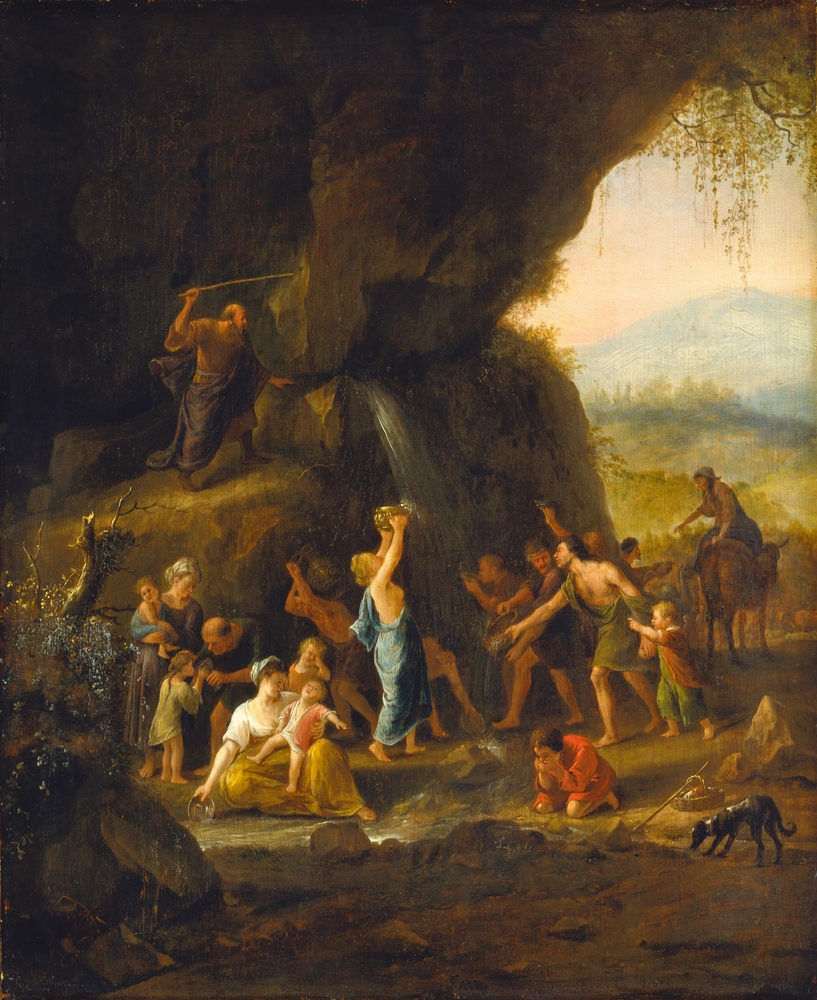
Most of us, if not now, then at some moments in our lives, end up in barren places: like Rephidim in our reading today. No water (loss of hope/ energy), and a big fat rock (obstacle) blocking our progress. Sometimes we are our own biggest enemy by our past actions but, at other times, the world colludes to make life difficult: like for all those innocent victims in Iran, and all over the Middle East; or the poor victims in Sudan and South Sudan.
Similar to last week, the First Reading reveals a key moment while on the journey of the Exodus from Egypt (slavery to freedom): which is like our journey out of sin to freedom, peace and deeper joy; or our journey out of an impossible situation not really of our own making.
There was no water at Rephidim where the Israelites camped and, as we know, “no water= no life.” The situation reveals the struggle they had to trust in God, and blamed Moses.
In our journey of life perhaps we, too, give up on God and ‘go our own way’ to find happiness, because being good, and faithful, is not making my life easier or happier! So, too, we can blame the Church for my unhappiness (and sometimes that’s justified!).
The church says “live your life like this” but I’m struggling to be happy! When life gets difficult, we need to strike, differently, the ‘rock’ that seems so unmoveable in our lives.
Perhaps it is my husband, or my wife, or people abusing me. When Moses strikes the rock, it is with the staff that parted the red sea: the instrument of God: do we consult God when we are facing a big fat rock in our lives? What is impossible to us is not for god. As someone said: “Insanity is repeating the same mistakes and expecting different results”, or “we cannot expect a different result if we keep doing the same thing.”
- eg. instead of shouting at family members when they do wrong, could we take them for an ice-cream, and ask them questions, to understand their pain, and to let them feel our love/ concern?
Another example: an Australia secondary student, an immigrant from South Sudan, was not happy taking orders from the female teacher. After some weeks of frustration, the teacher called in his parents: after a tense meeting discussing culture and that the boy should not do what a woman tells him, the boy asked dad in their native language: “so what will I do, then?” The dad replied quietly, “for now, do what the bloody woman tells you.”
Being humble doesn’t always have to be with joy: it just has to be!
In a retreat I gave to some Sisters a few years back, the theme was on self-awareness. While doing research, I encountered a speech on TED, by Tasha Eurich: TED – Increase your self-awareness with one simple fix
What Tasha discovered after a lot of research is that our lives can be turned around by a simple change in the way we respond to difficulties and rejection: stop asking ‘why’ and start asking ‘what’. For example, you and your boss are not getting on; you keep thinking: “why is he so mean to me?” Tasha gives real examples, where people stopped asking ‘why’ and started asking ‘what’: “what do I have to do to get the boss on my side?”
When we ask ‘why’, the assumption is that “I’m not doing anything wrong. The problem is him!” When we ask ‘what’, however, we open ourselves up to the possibility (probability??) that I am the problem! Or at least part of it.
Sometimes the “rock” at Rephidim for us, today, is a reflection of our own stubbornness and lack of openness to: new ways, new behaviour, and new priorities. A little humility can make a huge difference in whether the rock pours forth water (fruits of humility) or remains just a rock.
In the context of Lent, most of our sins are caused by the consequences of poor relationships, or alienating ourselves from the people who (should) matter most in our lives. It’s amazing how people can change their attitude to us, completely, when we just say “sorry, it was my fault.”
The young man from South Sudan reminds each of us to reflect on the cultural or behavioural patterns we have learned in the past and ask ourselves if they are still relevant today? eg. I’m now married: so, I need to communicate to my wife or husband where I’m going; to discuss spending money before spending it; and to stop drinking with my friends every Friday night.
In simple terms, Jesus in today’s Gospel, reminds the woman at the well, and us today, that many of our sins (read: broken relationships), are caused by doing the same actions over and over again. The woman had had five husbands. Jesus effectively tells her to do things differently: to drink a different type of water.
In today’s Gospel, Jesus models an important task for all of us: to cross, or break, relationship barriers related to culture, gender and/or religious divides. In response, the Samaritan woman witnesses to us how sharing our personal journey can lead to healing. This week, let us also cross barriers to find healing for the deep wounds that many of us carry.
By Gerard Conlan, OMI
