
Synodality: The sound of a tree falling in the forest?
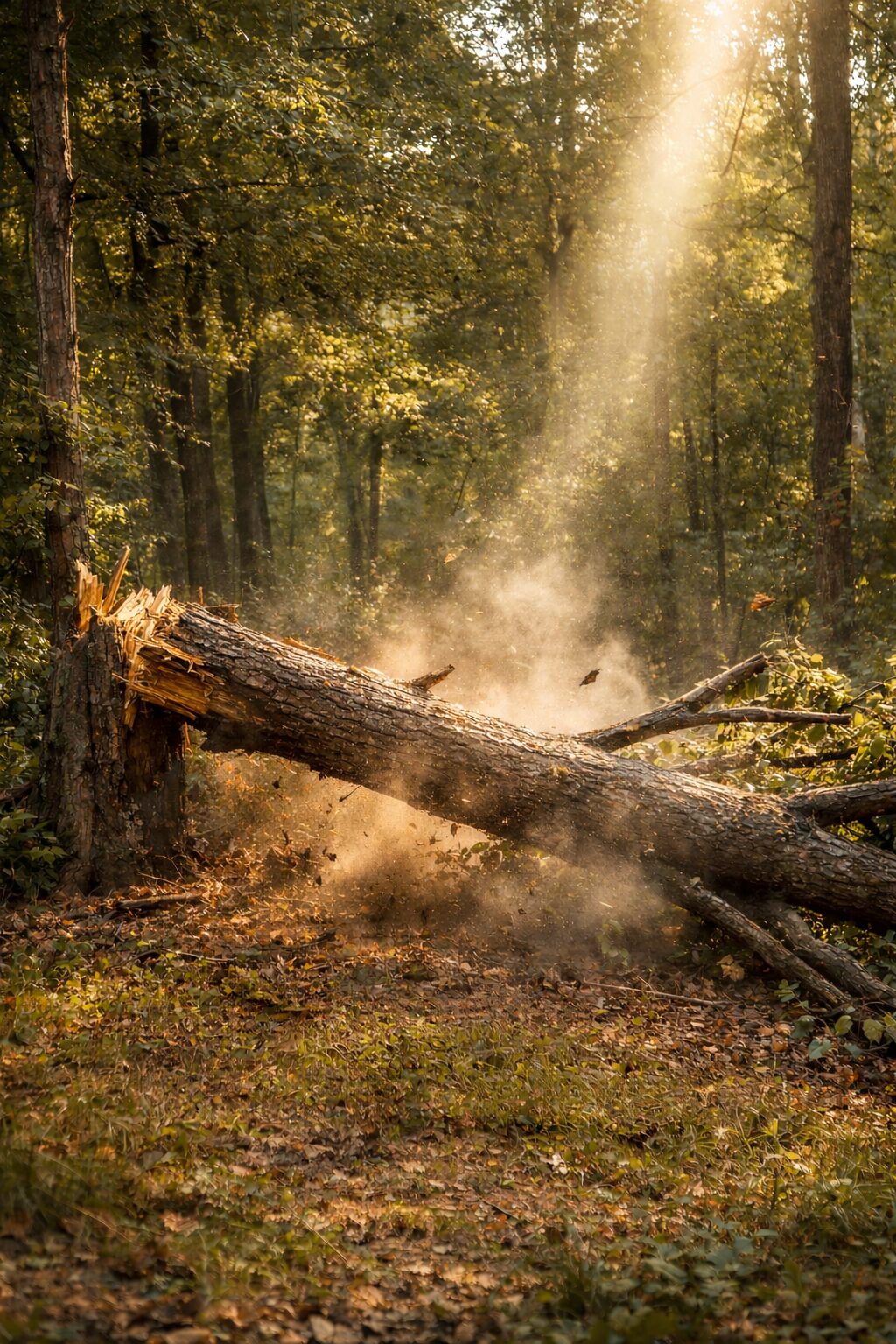
“If a tree falls in a forest and no one is around to hear it, does it make a sound?”
For decades, philosophers have debated how best to answer this question. Many suggest that existence in the absence of an observer is at best a conjecture – that is, a conclusion that can never be proven or disproven.
Others hold that our response must be tied to perception, saying, “if there be no ears to hear, there will be no sound.”
Recently, I’ve wondered: can the process of synodality in the Catholic church be compared to a tree falling?
Three times in the last month, different people have asked me if anything is happening regarding the process of synodality in Canada – because to be sure, most of us have heard nothing.
Pope Francis started the First Phase of the “Synod on Synodality” in October 2021 – April 2022, designed to feature “Listening and Discernment in Local Churches.” Around the world, as “conversations in the Spirit” were begun, dioceses collected summary reports, which were shared in regional, then national conferences of bishops, culminating in seven “continental reports.” All this input was used to prepare a working document for the XVI Ordinary General Assembly of the Synod of Bishops in Rome in October 2023, whose theme was “For a Synodal Church: communion, participation and mission.” But there was nothing “ordinary” in Francis’ dream for this Synod – the almost 200 delegates began with a prayerful retreat, they sat at round tables of eight persons in different language groups, and trained facilitators led the participatory dialogues among bishops, priests, and lay people – including 54 women who for the first time had voice and vote at a “Synod of Bishops”. And then the pope announced that the process would continue with another synodal gathering of these delegates one year later, in October 2024. Following the release of the “Final Document” (each paragraph being agreed to by the delegates), the church then entered the synod’s “Implementation Stage.”
It can be argued that the Synod on Synodality raised expectations for the transformation of attitudes and behaviours, ecclesial structures and procedures, and even the adoption of synodal practices in parishes and dioceses. Yet, raising these issues does not mean the synodal process answered them. Indeed, “if there be no ears to hear, there will be no sound.”
Pope Leo, who as a Cardinal participated in both Synods, hopes that this “walking together” will continue. Leo met with a thousand participants to mark the Jubilee of the last Synod, gathering in Rome in October 2025. Reports on progress were received by the pope from each of the seven continents, in a large meeting hall, where the pope also answered a pressing question from each region. Bishop Alain Faubert of Valleyfield, Quebec, presented the North American summary report, and applause erupted after he asked Leo, “What would you say to priests who see synodality as lessening their authority?” The pope acknowledged that the question was real, judging by the response of those in the audience that day. Leo went on to remark that there are bound to be “different paces” as synodal practices become more present in the church but stressed that good formation of participants could be a way to lessen tensions and allow a more responsible sense of belonging as the synodal process deepens.
In March 2024, Francis had appointed ten “Study Groups” covering touchy questions that had been raised in the First Session (October 2023.) The themes of these Study Groups ranged from issues in Canon Law, to the role of bishops and papal nuncios, to the role of women – in a Study Group that was rather cryptically titled, “Some theological and canonical matters regarding specific ministerial forms.” The deadline for completing final reports was extended (after Francis’ death) until December 2025. These documents are periodically being released by the Synod Secretariat.
On March 24th, 2026, the 42-page report of Study Group #2, including an Executive Summary, was released in five languages.
Study Group #2 was initially entitled, “Listening to the Cry of the Poor” – but the Church’s teaching – especially Laudato si’ and Laudate Deum – have encouraged hearing the cry of the earth, too. So quickly we changed the theme to combine how the church should hear both “the cry of the poor and the Earth.” Our Study Group was among only two that were chaired by women, and women comprised the majority of our six members. We met via Zoom 23 times, managing the vagaries of vastly different time zones, with the support of staff of the Dicastery for Promoting Integral Human Development.
This report humbly acknowledges that a great many good efforts are already going on in parishes, dioceses and regions. Yet, as Pope Leo pointed out in Dilexi te (nos. 99-102, “The Poor as Subjects”) justice arises from the participation of the excluded. Church organizations can always be encouraged to appoint more people who are poor or marginalized, since popular movements for justice can release “a torrent of moral energy that springs from including the excluded in the building of a common destiny.”
By hosting a sub-group with lived expertise on the matter, the report recommended specific ways for the Vatican to establish an Ecclesial Observatory on Disability. Another sub-group of academics provided concrete measures for theologians to align their contributions with social and ecological ministries. After receiving over 200 responses to a survey sent to religious congregations, this Study Group report was able to recommend 20 practical ways that formation programs could link Catholic Social Teaching, social analysis and synodal practices of concern for the poor and the Earth to concrete justice training for all ministers in faith communities.
The text highlights how the church cannot remain silent. “Pope Francis taught that the Gospel has a political dimension: to transform the social, including religious, mindset of the people. Advocacy is not, therefore, an afterthought for the Christian, but rather a responsibility. In fact, political love is “one of the highest forms of charity as it seeks the common good” (Fratelli tutti, no. 180). Yet fear of accusations of partisan politics, or of reprisals from powerful authorities, can prevent Christians from building on charitable works of direct assistance to include the public denunciation of injustices and proposals for systemic change towards social and ecological justice. Political love is also an art and practice to be developed with prayerful discernment and care for the common good. Closeness to those made poor and to the rest of creation guarantee the authenticity of advocacy.” (pages 32 – 33.)
And the preamble to the report, penned by Canadian Cardinal Michael Czerny, noted that syodality calls churches to be open to work with others in the pursuit of social and ecological justice. “The Bishops of Quebec make a strong call for Church leadership to be open to such wider collaboration without judging their catholicity as a starting point” (page 5.)
So then, in your parish and in your diocese, is synodality like a tree falling in the forest without being heard?
It may all depend on how attuned the ears of potential listeners may be…
After all, it is rumoured that Albert Einstein, when grappling with this philosophical conundrum, once turned and asked a friend, “Do you really believe that the moon only exists if you look at it?”
By Joe Gunn
Joe Gunn was appointed by Pope Francis to be a member of Study Group #2, as part of the Synod on Synodality.
