
To a New Land: Faith, Family, and the Lenten Journey
Second Sunday of Lent – March 1, 2026
Starting a family is the modern version of leaving everything behind and trusting God’s blessings will follow … your first child is a moment of transfiguration where God is experienced extraordinarily. Becoming a Religious is similar if lived authentically: but giving ‘birth to a child’ depends on a radical self-giving to empower the youth.
The First Reading may seem interesting, but not very ‘exciting’. However, after some study, we find a very deep and life-changing teaching (especially for men): it is the Lenten journey.
This reading is a pivotal moment in the Bible: at a spiritual level it marks the beginning of God’s NEW ‘covenant relationship’ with Abraham and establishes Israel’s identity: which is also the Christian identity and Mission, later deepened by the life of Jesus Christ.
But how does that help us today? Before I start, I mentioned above that today’s readings are extra important for m, it marks the beginning of God’s NEW ‘covenant relationship’ with Abraham and establishes Israel’s identity,en. Why? Because women naturally venture into a ‘new land’, a new reality, when they carry and give birth to a child. Men, however, need something extra.
I see three critical elements in the First reading to discover what the Covenant means for us:
1. God’s Invitation and Abram’s courageous response to go;
2. If we take the first difficult step correctly, there is the promise of Blessings to come;
3. Faith as a Journey: to be happy in life we must not stand still; God’s call is not a once off.
The first element helps us see that, in order to ‘grow up’, we must separate from what is familiar: God is leading Abram through a necessary initiation. Throughout history, our ancestors recognised the need for adolescents to undergo a radical initiation: Fr Richar Rohr OFM says that these initiation rites became the beginnings of religious practices.
Related to today’s Reading, one initiation practice was this: a father would take his son into the forest, blindfold him and the boy would have to sit like that all night, thinking he is completely alone: he hears all the animal noises and has to face his fear of being killed and to face death. Unknown to him, his father is seated some short distance away to protect him.
Leaving our own country, is not always a change in geography, but a change in space: we all begin this process through puberty. Case in point: a mother, in tears, came to the Rector of an Oblate College asking for advice: her son is acting ‘strangely’ and she doesn’t know what to do. Fr Peter replied: “madam, your son has left the planet, and we pray he will return to earth in about two years.” Like dad, in the initiation story above, the unseen God is also with us.
So, a life-transforming Lenten journey begins by leaving behind those, often, negative behaviours we cling to for pleasure, material comfort and a sense of control: Lent invites us to be courageous and honest about our sinful habits and head to a ‘new land’ of vulnerability.
Secondly, just as Abram responded with courage/ obedience, without knowing the destination, we are also invited to trust God: the beginning of TRUE faith, not just religious practice: where we learn to appreciate and love, despite past failings, our God-given selves, without depending on the praise of others; it is a freedom that needs courage: to stop doing things to gain praise.
Thirdly, just as God promises Abram a new and greater life, so God promises us, today, that through this vulnerable separation from our false securities (be it status, material pleasures, or ‘enmeshed’ relationships), our eyes will be opened (like the disciples at the transfiguration), to a greater level of meaning and true joy in life: slowly living more for the good of others.
In our present age, the ‘new land’ is marriage commitment or Religious life: many young men and women are seeking careers and avoiding commitment; but, in the end, they find that money is a cold friend. Meanwhile, by the time they realise, the vital precious years to create children (say 20 to 35) have passed, and they now have the somewhat ‘empty’ lives of just themselves.
The happiest people in the world often have little money, but many children, grandchildren and a vibrant community life. They are loved by their children and appreciated by the wider community because of their involvement, and contribution, to the wider community:
“I will make your name great, so that you will be a blessing.” This was also the promise, in different words, given to the disciples by Jesus at various times in the Gospels.
We hear that Abram was not blessed for his own sake alone: “All the communities of the earth shall find blessing in you”. Can we recognise that, despite their imperfections and failings, we look with gratitude to our parents/ grandparents (usually), for the sacrifices they made for us?
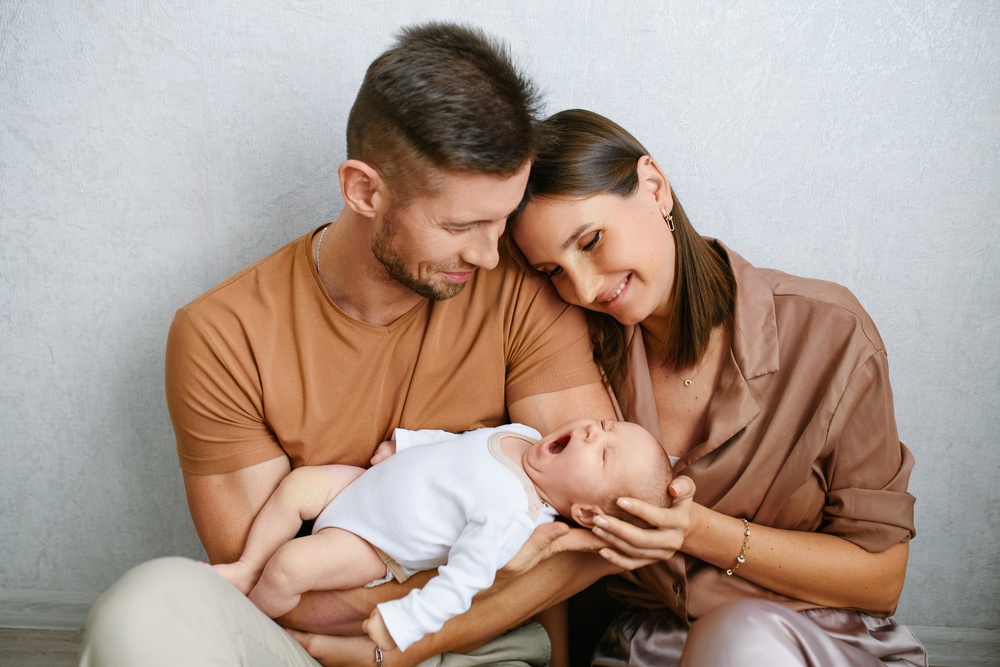
Like Peter, who did not know how to react to the Transfiguration, our task in married life, is to be hospitable offering shelter for the family members that appear before us, as though by magic: how many parents, holding their first child in their arms are overcome with wonder: and how many (who started late) are heard to say, we should have done this long ago?
It seems strange that we have to proclaim marriage, today, as the ‘new land’ that God is calling us to. But our great nations will no longer be great unless the foundations of family-life are re-established: “I will make of you a great nation, and I will bless you.”
In simple terms, the Transfiguration teaches us that God continually invites us to a ‘new land’ so we can find peace in our lives: Max Lucado puts it like this: “God loves you just the way you are, but He refuses to leave you that way. He wants you to be just like Jesus.”
By Gerard Conlan, OMI
